
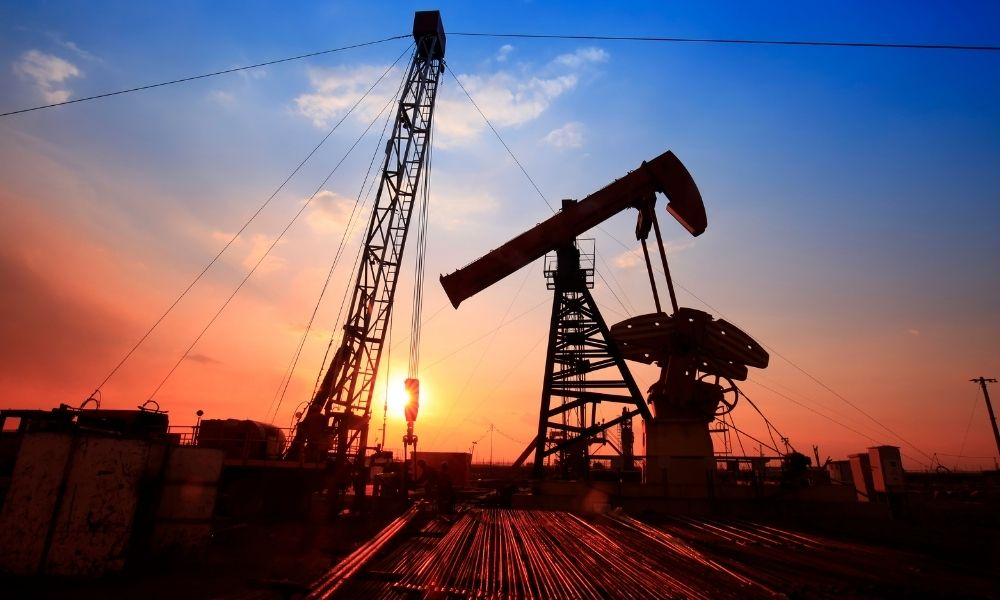
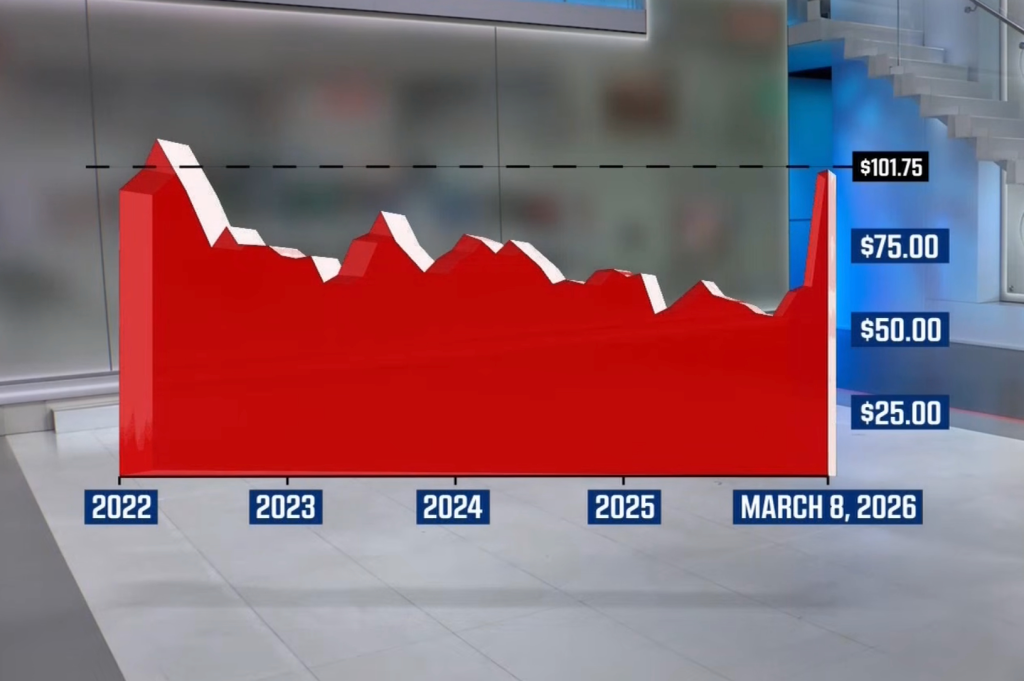
Global oil prices have surged sharply in recent days as escalating tensions in the Middle East begin to disrupt energy supply routes. West Texas Intermediate (WTI) crude oil is now hovering around $100 per barrel, marking one of the fastest price increases in recent years. The last time oil prices reached similar levels was in June 2022 during the Russia–Ukraine conflict.
As shown in the price chart above, oil markets have experienced an almost vertical increase over the past two weeks, highlighting how quickly the situation has intensified. Before the current conflict began, U.S. oil prices were trading at around $67 per barrel, but they briefly jumped as high as $119 overnight, representing one of the largest single-day price increases in oil market history.
Strait of Hormuz Disruption Creating Global Supply Concerns
A major factor behind the price surge is the disruption of oil shipments through the Strait of Hormuz, one of the most critical energy corridors in the world. This narrow waterway between Iran and Oman is only about 20 miles wide, with a two-mile shipping lane, yet it carries a significant portion of the world’s oil supply.
Recent military tensions and attacks across the region have slowed or halted oil shipments through the strait. As a result, oil producers in the Middle East are facing difficulties transporting crude to global markets. Storage facilities are also approaching capacity, forcing some producers to reduce production because they have nowhere to store the oil.
Experts warn that if oil shipments through the Strait of Hormuz do not resume soon, global crude prices could climb even higher, potentially reaching $150 per barrel by the end of March.
Fuel Prices Rising Worldwide
The rapid increase in crude oil prices is already impacting fuel costs globally. Gasoline prices in the United States have risen from about $2.98 per gallon before the conflict to around $3.48 per gallon, the highest level since August 2024.
Diesel prices have increased even more dramatically, rising by approximately 24%, reaching their highest level in three years. This surge is particularly concerning for industries that depend heavily on diesel fuel, including agriculture, transportation, trucking, and railways.
Airlines are also warning about rising costs, as jet fuel prices have spiked significantly, which could lead to higher airfare prices for travelers.
Infrastructure Attacks Add to Market Uncertainty
Recent drone attacks targeting areas near key energy infrastructure have added further uncertainty to global energy markets. In Bahrain, a drone strike near industrial facilities injured dozens of civilians and caused disruptions near critical energy infrastructure. Reports also suggest that fires were seen near oil refinery facilities, raising concerns about potential damage to production and storage sites.
Bahrain’s national oil company has reportedly issued a force majeure declaration, meaning it may not be able to fulfill certain oil delivery contracts due to the ongoing conflict and unexpected disruptions.
Global Response and Market Outlook
Global leaders and financial officials are closely monitoring the situation. G7 finance ministers are currently discussing the possibility of releasing oil from their strategic reserves in an attempt to stabilize markets and reduce price pressure.
However, experts warn that releasing emergency oil reserves would only be a short-term solution, as those reserves are limited and cannot quickly replace long-term supply disruptions.
Market analysts say the future direction of oil prices will largely depend on how long the conflict continues and whether oil shipments through the Strait of Hormuz resume. If the disruption lasts only a few days, the economic impact may be limited. But if the crisis continues for weeks, it could lead to higher global inflation and increased energy costs worldwide.
For consumers around the world, rising oil prices often translate into higher fuel costs, transportation expenses, and increased prices for everyday goods.